

In short: Most Australian businesses see first local SEO movement – better map pack visibility, more profile views and calls – within 2 to 4 months of consistent work. Competitive markets and high-value industries typically need 6 to 12 months for durable top-three map pack positions. Local SEO is faster than national SEO, but anyone promising page-one rankings in weeks is selling something Google will eventually punish.
Last updated: October 2026.
“How long until this works?” is the first question every business owner asks about local SEO – and the honest answer is the one most agencies avoid giving: it depends, but the range is narrower than you’d think. Unlike national SEO campaigns that can take a year to gain traction, local SEO operates in a smaller competitive arena, which means results arrive sooner – provided the work is consistent and the foundations are right.
This guide gives you realistic Australian timelines, what moves them faster or slower, and what you should expect month by month. For the national picture, see our guide on how long SEO takes more broadly.
The honest answer: 2-4 months for movement, 6-12 for dominance
For a typical Australian small business – a suburban dental clinic, a local law firm, a café, a trade business – consistent local SEO work produces visible movement within 2 to 4 months: higher map pack positions for suburb-level searches, more Google Business Profile views, more direction requests and calls. These are leading indicators that the strategy is working.
Durable top-three map pack positions in competitive searches usually take 6 to 12 months. “Durable” is the key word – anyone can spike briefly, but holding the top spots through Google’s ongoing re-evaluations requires the compounding weight of reviews, citations and engagement that only time builds.
Businesses in low-competition niches or regional towns often move faster; a personal injury lawyer in Sydney’s CBD will wait longer than a diesel mechanic in Dubbo. That’s not a flaw in the strategy – it’s the market telling you exactly how much competition you’re buying your way past with effort.
Why local SEO is faster than traditional SEO
National SEO campaigns compete against the entire country’s content – thousands of pages, established domains, media sites. Local SEO competes against the dozen or so businesses in your service area, most of which are doing the bare minimum: an unclaimed or half-finished Google Business Profile, a handful of stale reviews, inconsistent directory listings.
That low bar is your opportunity. Completing your profile, publishing weekly posts and generating a steady stream of reviews can leapfrog competitors who set up their listing in 2019 and never touched it again. In local search, consistency beats cleverness – and most of your competitors aren’t consistent. New to the discipline? Start with our local SEO explainer before worrying about timelines.
What determines your timeline
Six factors decide whether you’re looking at the fast or slow end of the range:
1. Competitive density
Count the businesses fighting for your map pack. Three cafés in a country town is a different universe from forty conveyancers across inner Melbourne. More competitors means more review velocity and citation depth required to stand out – which takes more months.
2. Your starting point
A brand-new business with no reviews starts from zero. An established business with 150 reviews and a complete profile starts halfway up the hill. Businesses recovering from a GBP suspension or past spammy tactics start below zero – cleanup comes before progress.
3. Review velocity and quality
Reviews are the single biggest timeline lever you control. A business generating five genuine reviews a month will outpace one generating one a quarter, all else being equal. Recency matters – Google weights what customers said this month more than what they said in 2023.
4. Citation foundation
If your business name, address and phone number are inconsistent across the web, Google’s confidence in your listing is low – and low confidence means low rankings. Cleaning up NAP inconsistencies is unglamorous foundational work, but skipping it caps everything else you do.
5. Website authority and relevance
Your website still matters for local rankings. A fast, mobile-friendly site with clear service-area pages and local content gives Google the on-page confirmation it needs. A thin or broken site drags the whole campaign.
6. Market value
High-value industries (legal, finance, medical, construction) attract serious SEO investment from competitors, which raises the bar for everyone. Low-margin local retail moves faster because nobody’s spending heavily to win it.
Month by month: what to expect
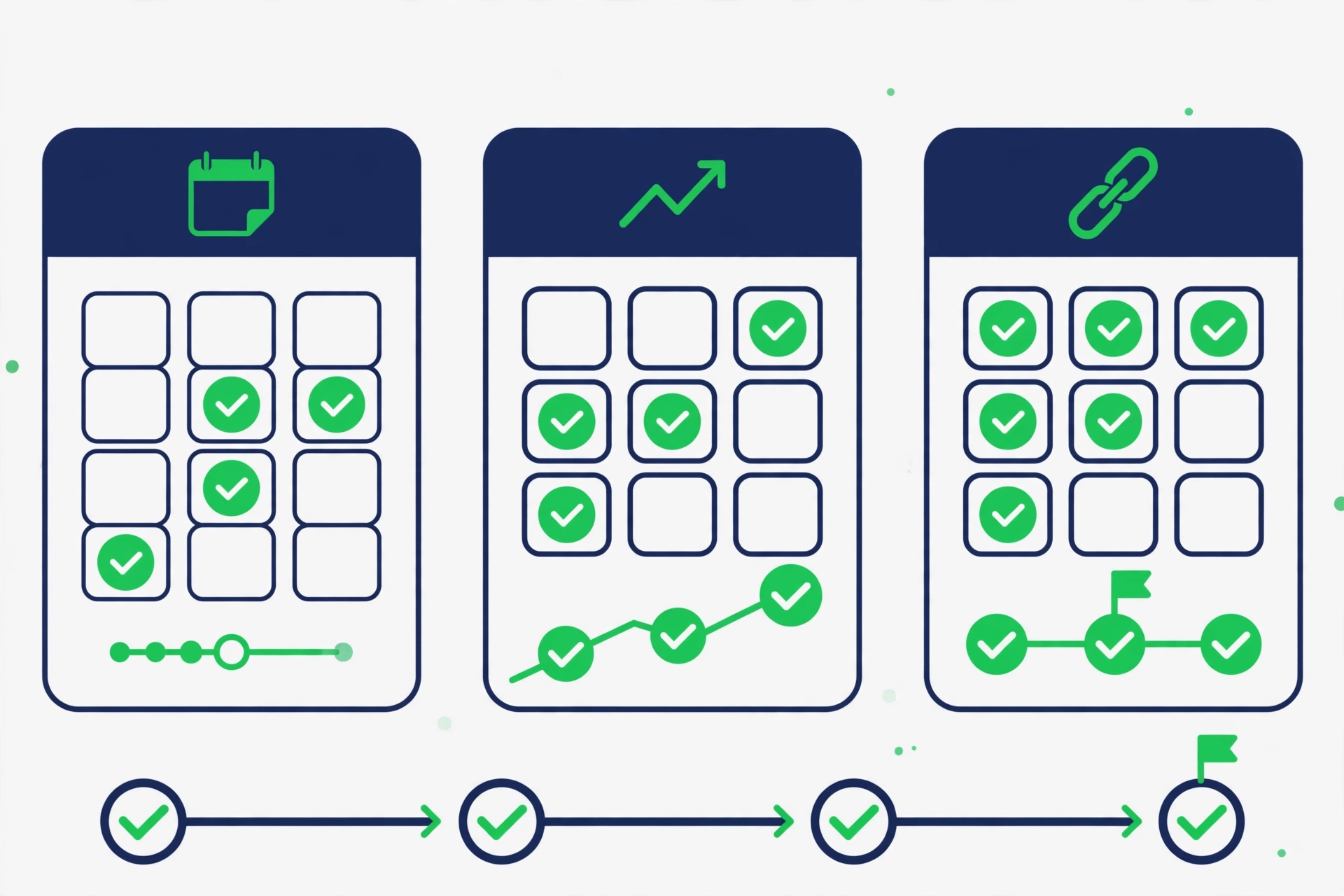
Timelines vary, but a well-run local SEO campaign for an Australian small business typically unfolds like this:
Months 1-2: foundations
GBP claimed, verified and fully optimised – categories, hours, services, photos, attributes. NAP audit across major directories with inconsistencies fixed. Review generation system launched (QR codes, SMS follow-ups). Website local signals improved: service-area pages, embedded map, local schema. Expect little visible movement yet – this is groundwork.
Months 3-4: first signals
Map pack positions start shifting for longer-tail and suburb-specific searches. GBP insights show rising profile views, direction requests and calls. Review count climbs. This is where most businesses first feel the campaign working – not in dramatic ranking jumps, but in the phone ringing slightly more often.
Months 5-6: momentum
Competitive suburb terms start moving. Review velocity compounds – each new review makes the next customer more likely to choose you and review you. Citation profile deepens with Australian directories (True Local, Yelp AU, Word of Mouth). If you’re tracking properly, the trend lines are clearly positive.
Months 7-12: compounding
Top-three map pack positions for priority searches become the norm rather than the exception. The flywheel spins: visibility drives customers, customers drive reviews, reviews drive visibility. Competitors now need to outwork your accumulated advantage, not just match your current effort. This is also when businesses typically expand – new service areas, new suburb pages, new GBP posts cadence.
Early signs it’s working (before rankings move)
Rankings are a lagging indicator. Watch these leading metrics in your first 90 days:
- Google Business Profile views, calls and direction requests trending up in GBP insights
- Growth in branded searches (people searching your business name – a sign your visibility is creating awareness)
- Review count and average rating improving
- More “discovery” searches (customers finding you via category rather than your name)
- Increased calls asking “are you near [suburb]?” – proof your service-area signals are landing
If none of these move after three months of genuine effort, something structural is wrong – usually NAP inconsistency, a miscategorised profile, or a suspended listing nobody noticed.

Why local rankings stall
When progress flatlines, the cause is usually one of these:
- Review drought: the initial burst of reviews stopped and competitors kept going. Review velocity is a treadmill, not a milestone.
- Profile neglect: no new photos or posts for months signals to Google that the business is less active than competitors.
- Citation rot: details changed (new phone, moved premises) and old listings weren’t updated.
- Category mismatch: ranking for the wrong category, or missing the category customers actually search.
- Proximity limits: sometimes you’re simply too far from the searcher cluster. The fix is service-area expansion content and satellite relevance, not more of the same.
- A stronger competitor woke up: a rival hired help or got serious. Local SEO is relative – your progress is measured against their effort.
Red flags: promises that should worry you
Local SEO has more than its share of snake oil. Walk away from anyone who:
- Guarantees #1 map pack rankings (nobody can – Google decides, and proximity to each searcher varies)
- Promises results in 30 days (review and citation building can’t be safely rushed)
- Offers hundreds of reviews or citations for a flat fee (fake reviews breach Google policy and Australian Consumer Law)
- Won’t explain what they’ll actually do each month (legitimate work is describable: posts, photos, citations, review outreach, reporting)
- Locks you into long contracts with no performance reporting
A trustworthy provider sets expectations in months, reports on profile views and calls (not just rankings), and treats reviews as something you earn together. Our SEO services are built around exactly that kind of transparent, month-by-month local program – and if you’re weighing professional help, this breakdown of what a local SEO consultant does will help you judge any provider.
Can you speed it up?
Within ethical bounds, yes. The accelerators are: launching review generation on day one (don’t wait for “later”), publishing GBP posts weekly from the start, fixing every citation inconsistency in month one rather than gradually, and adding genuine photos constantly. Paid local ads can also bridge the gap while organic builds – many Melbourne businesses, for example, run Google Ads alongside their local SEO in Melbourne so the phones ring from day one while the map pack compounds.
What you can’t do is shortcut trust. Google’s local algorithm is specifically designed to reward sustained, genuine business activity – the businesses that try to game it with fake reviews or spammy listings eventually get filtered or suspended, losing months of progress overnight.
Local SEO timelines – frequently asked questions
How long does local SEO take for a new business?
New businesses should expect 4 to 6 months for meaningful movement and 9 to 12 for strong positions, since you’re building reviews, citations and history from zero. The foundations matter even more when you’re new – get the profile, categories and NAP right from day one.
Why did my rankings drop suddenly?
Sudden drops usually mean a profile issue (suspension, category change, merged duplicate listing), a Google algorithm update reweighting local factors, or a competitor surge. Check your GBP status first, then review velocity relative to competitors.
Do I need to keep doing local SEO once I rank?
Yes – rankings are rented, not owned. Competitors keep earning reviews and posting updates; stopping means decaying while they compound. Maintenance is lighter than the initial push, but it’s permanent.
Is local SEO faster in regional Australia?
Generally, yes. Fewer competitors means less review velocity and citation depth needed to lead the pack. Many regional businesses see strong results in 2 to 3 months – though the search volumes are smaller, so every position matters more.
How is local SEO timing different from national SEO timing?
Local SEO typically shows results in 2-4 months versus 6-12+ for national campaigns, because you’re competing locally rather than nationally and the map pack responds faster to profile and review signals than organic results respond to content and links.