
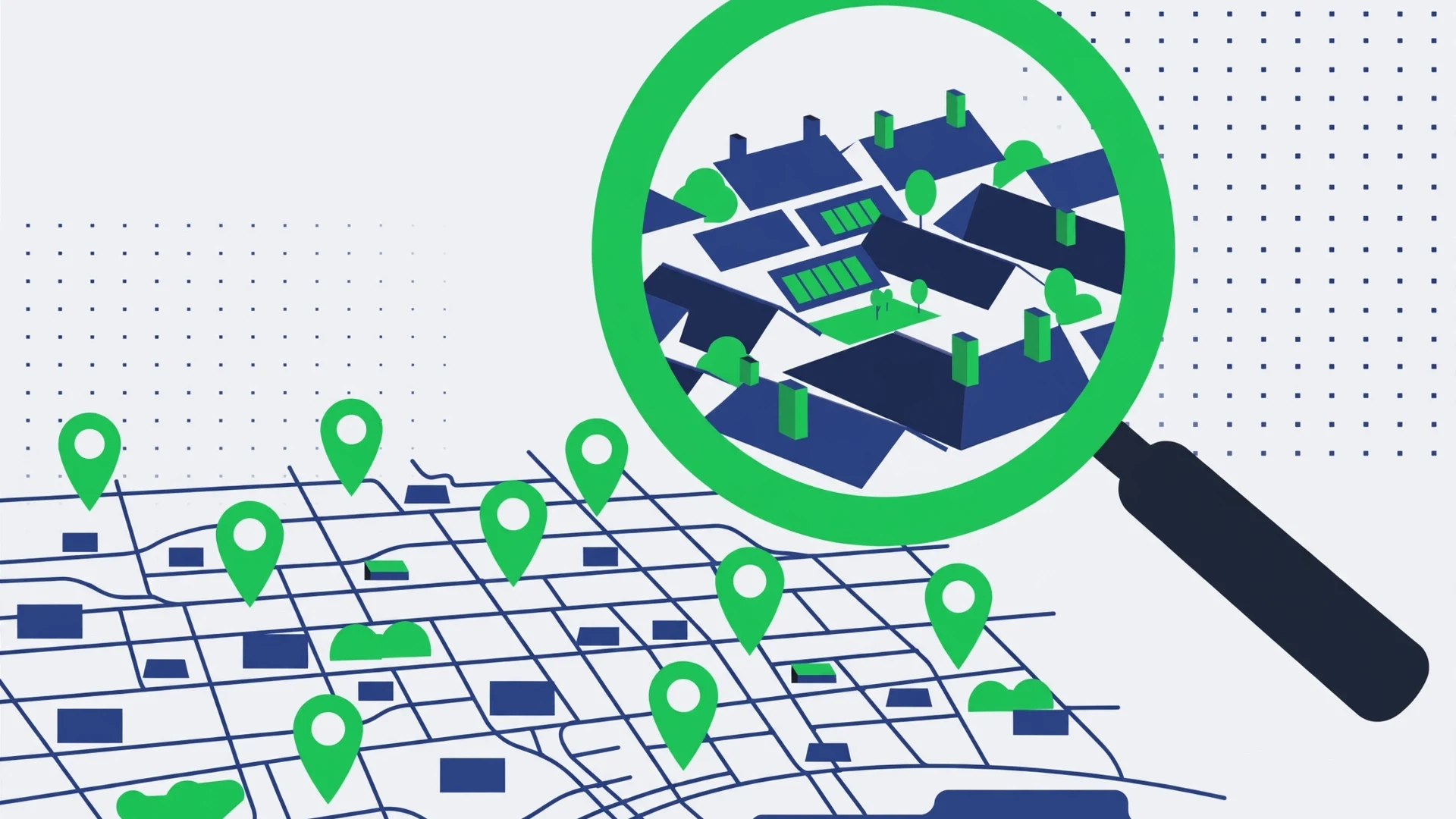
In short: Local SEO is the practice of making your business visible to customers searching for what you offer in your area – think “plumber near me” or “best coffee Brisbane”. Unlike traditional SEO, which targets national or global searches, local SEO focuses on the Google map pack, your Google Business Profile, reviews and local citations. For any Australian business that serves customers in a physical area, it’s the highest-ROI marketing channel available.
Last updated: October 2026.
When someone’s hot water system bursts on a Sunday morning in Parramatta, they don’t scroll through national plumbing websites. They search “emergency plumber near me” and ring one of the three businesses Google shows in the map pack. Local SEO is the discipline of making sure your business is one of those three – and it’s how thousands of Australian tradies, clinics, cafés and retailers win customers every single day.
If you’re new to search marketing generally, start with our guide on what SEO is – this article builds on it with a purely local lens.
What is local SEO, exactly?
Local SEO (local search engine optimisation) is the process of optimising your online presence so your business appears in localised search results. Google treats certain searches as having “local intent” – when someone searches “dentist”, “pizza” or “car mechanic”, Google assumes they want something nearby and shows location-based results, even if the searcher didn’t type a suburb.
The goal isn’t to rank for “best lawyer” across Australia. It’s to dominate the searches that happen within your service area: “lawyer near me”, “family lawyer [your suburb]”, “conveyancing [your city]”. These searches carry the strongest buying intent on the internet – the searcher is ready to call, visit or book.
How local SEO differs from traditional SEO
Traditional SEO aims to rank web pages in Google’s organic results for broad queries. Local SEO adds a geographical layer and plays by different rules:
- Different real estate: Local searches trigger the map pack – the block of three business listings with a map that sits above or beside organic results. The map pack gets the lion’s share of clicks for local-intent searches.
- Different signals: While traditional SEO leans on content and backlinks, local rankings depend heavily on your Google Business Profile, review quantity and quality, citation consistency, and proximity to the searcher.
- “Near me” behaviour: Australians increasingly search with “near me” or simply let Google use their location. You can’t win these searches with a national content strategy alone – you need local signals.
- Different competition: You’re not competing with the whole country. You’re competing with the handful of businesses in your suburb or service area – which makes local SEO winnable for small businesses in a way national SEO often isn’t.
The local pack: where the money is
The map pack (sometimes called the local pack or 3-pack) shows three businesses with their star rating, review count, opening hours and a map pin. For searches like “café near me” or “emergency electrician”, the vast majority of clicks go to these three listings – many searchers never scroll past them.
Google decides who appears based on three factors: relevance (does your profile match the search?), distance (how close are you to the searcher?), and prominence (how well-known and well-reviewed is your business online?). You can’t change your location, but relevance and prominence are entirely within your control – that’s what local SEO works on.
The four pillars of local SEO
Every effective local SEO strategy in Australia rests on four pillars:
1. Google Business Profile
Your Google Business Profile (GBP, formerly Google My Business) is the single most important local ranking asset you own. It’s free, and it powers your map pack listing, your Knowledge Panel, and how you appear in Google Maps. An optimised profile has the right primary category, accurate hours (including public holidays), real photos, products or services listed, and regular posts.
2. Reviews
Reviews are the currency of local search. Google uses review quantity, average rating and recency as ranking signals, and customers use them as the tiebreaker between you and the business next door. Australian consumers are prolific reviewers – a steady stream of genuine reviews is non-negotiable.
3. Citations and NAP consistency
Citations are mentions of your business name, address and phone number (NAP) across the web – directories, social profiles, industry sites. Google cross-references them to verify your business is legitimate. Inconsistent details (a changed phone number here, an old address there) erode trust and cost you map pack positions.
4. Local on-page signals
Your website needs to reinforce your location: suburb and city references in titles and content, embedded maps, local schema markup, and dedicated pages for each service area. This is how Google connects your website to your physical presence.

Google Business Profile: your free shopfront
Think of your GBP as a second website – one that Google shows directly in search results. Businesses that treat it as an afterthought lose to competitors who treat it as a shopfront. The essentials:
- Choose the most accurate primary category (and relevant secondary categories) – this is the strongest relevance signal you control.
- Fill every field: hours, holiday hours, services, products, attributes (wheelchair access, women-led, etc.).
- Upload real photos regularly – exterior, interior, team, work in progress. Businesses with photos get dramatically more engagement.
- Post weekly: offers, updates, events, new products. Posts keep your profile fresh and give searchers a reason to choose you.
- Use the Q&A section proactively – seed it with the questions customers actually ask.
- Respond to every review, positive and negative, within days.
A note for Australian service-area businesses (tradies, mobile services): hide your street address and define your service areas instead. Google allows this, and it keeps your home address private while still letting you rank across the suburbs you serve.
Reviews: your public reputation engine
In local SEO, reviews do double duty – they influence rankings and they win the click. A business with 4.9 stars and 200 recent reviews will beat a 5.0-star business with 12 reviews from 2023, because Google (and customers) trust volume and recency.
Build a review system, not a review hope:
- Ask at the moment of peak satisfaction – right after the job, the appointment, the meal.
- Make it frictionless: a QR code at the counter, an SMS with a direct review link, a follow-up email.
- Respond to every review personally. Thank positive reviewers by name; address negative reviews calmly and take the resolution offline.
- Never buy reviews, never offer incentives for positive reviews – it breaches Google’s policies and Australian Consumer Law, and competitors will report you.
Review platforms beyond Google matter too – ProductReview.com.au, True Local and industry-specific sites (HealthEngine for clinics, for example) all feed the trust signals Google watches.
Citations and NAP consistency in Australia
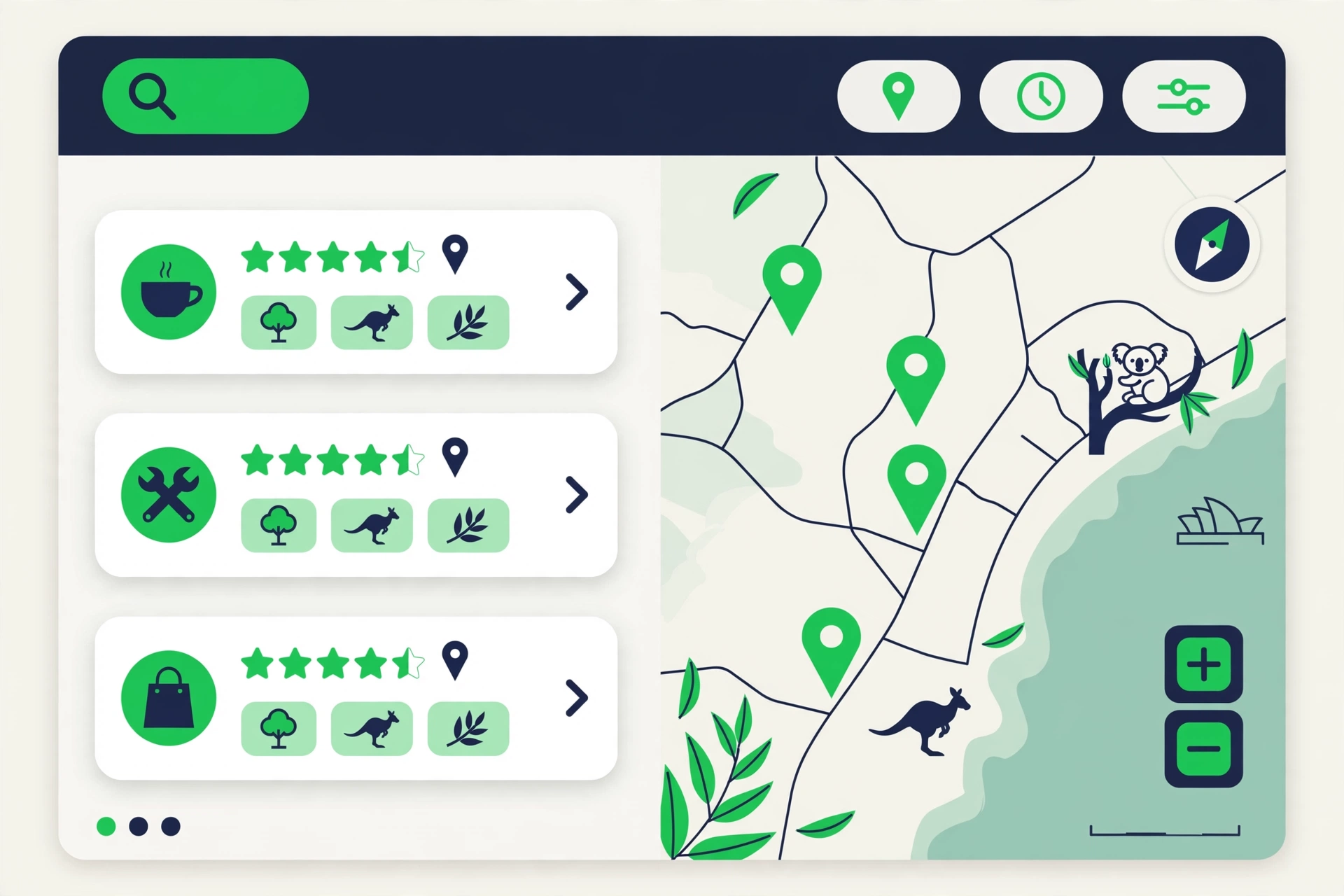
Your business name, address and phone number must be character-for-character identical everywhere they appear: your website, your GBP, Facebook, Instagram, and every directory. “St” vs “Street” or a mobile number on one site and a landline on another creates the kind of inconsistency that quietly costs map pack positions.
Beyond the global directories, Australian businesses should be listed where Australians actually search: True Local, Yellow Pages AU, Yelp Australia, Word of Mouth, Hotfrog, and your industry’s directories. A local SEO consultant will typically audit your existing citations, fix inconsistencies and build out the missing ones as foundational work.
Don’t overlook data aggregators either – incorrect listings on major data providers can propagate wrong details across dozens of smaller directories automatically.
Who needs local SEO in Australia?
If customers come to you, or you go to them, within a defined area – you need local SEO. That includes:
Trades and home services: plumbers, electricians, builders, pest control, landscapers
Health and professional services: dentists, physios, lawyers, accountants, vets
Hospitality and retail: cafés, restaurants, bars, boutiques, gyms
Automotive: mechanics, detailers, tyre shops
Real estate, mortgage brokers and local financial services
Businesses that operate purely online with no service area are the exception – for everyone else, local search is where the buying happens. Even businesses with a national footprint benefit from location pages for each area they serve; see our local SEO guide for Sydney for how metro-level targeting works in Australia’s biggest market.
What local SEO is not
Local SEO won’t help you rank nationally for generic terms, and it’s not a substitute for a good website – your GBP can win the click, but your site has to win the customer. It’s also not a one-time setup. Competitors keep gathering reviews, posting updates and building citations; standing still means sliding backwards.
It’s also worth knowing the timeline: local SEO compounds, but it isn’t instant. Read our guide on how long local SEO takes for realistic expectations before you start.
Getting started with local SEO
The fastest wins are almost always the same: claim and fully optimise your Google Business Profile, fix your NAP inconsistencies, and start a genuine review-generation system. Those three moves alone will move most Australian small businesses up the map pack within a few months.
From there, the work deepens – citation building, local content, suburb-level pages, review velocity, and ongoing GBP management. Our SEO services include dedicated local SEO programs built for Australian service areas, and if you’d rather have an expert run it, here’s what a local SEO consultant does day to day.
Further reading in this cluster:
- How Long Does Local SEO Take? Realistic Timelines for Australia
- Local SEO Consultant Explained: What They Do and When to Hire One
Local SEO – frequently asked questions
Is local SEO different from regular SEO?
Yes. Regular SEO targets organic rankings for broad queries; local SEO targets the map pack and location-based searches. They share foundations (a fast, well-built website matters for both) but local SEO adds Google Business Profile optimisation, reviews and citations as core ranking levers.
Do I need a physical shopfront for local SEO?
No. Service-area businesses – tradies, mobile services, consultants who visit clients – can rank in the map pack without displaying a street address. You define the suburbs you serve in your Google Business Profile instead.
How much does local SEO cost in Australia?
It varies widely by market competitiveness and scope – a suburban café needs far less work than a personal injury law firm in Sydney. Be wary of anyone offering guaranteed rankings for a suspiciously low fixed fee; genuine local SEO is ongoing work, not a one-off trick.
Can I do local SEO myself?
The basics, absolutely: claim your GBP, complete your profile, gather reviews and fix your citations. Many small businesses handle this in-house. The deeper work – competitive citation building, multi-location management, review strategy at scale – is where professional help pays for itself.
Does local SEO work for multiple locations?
Yes, with a location-per-location approach: a dedicated GBP listing and location page for each genuine physical location or service area. Each location needs its own reviews and citations – there’s no shortcut that ranks five suburbs from one listing.